Western Sydney airport

Western Sydney airport welcomes first international passengers
Air New Zealand flight NZ165 from Auckland touched down on 26 October, a day after Jetstar launched domestic flights at the 24-hour airport.
By Felix Arden
Thursday 29 October 2026
Sunday BestJournalMore than 7,800 flights were cancelled across Saudi airports between 8 and 25 October, according to Cirium, with Riyadh alone losing 86% of scheduled departures.
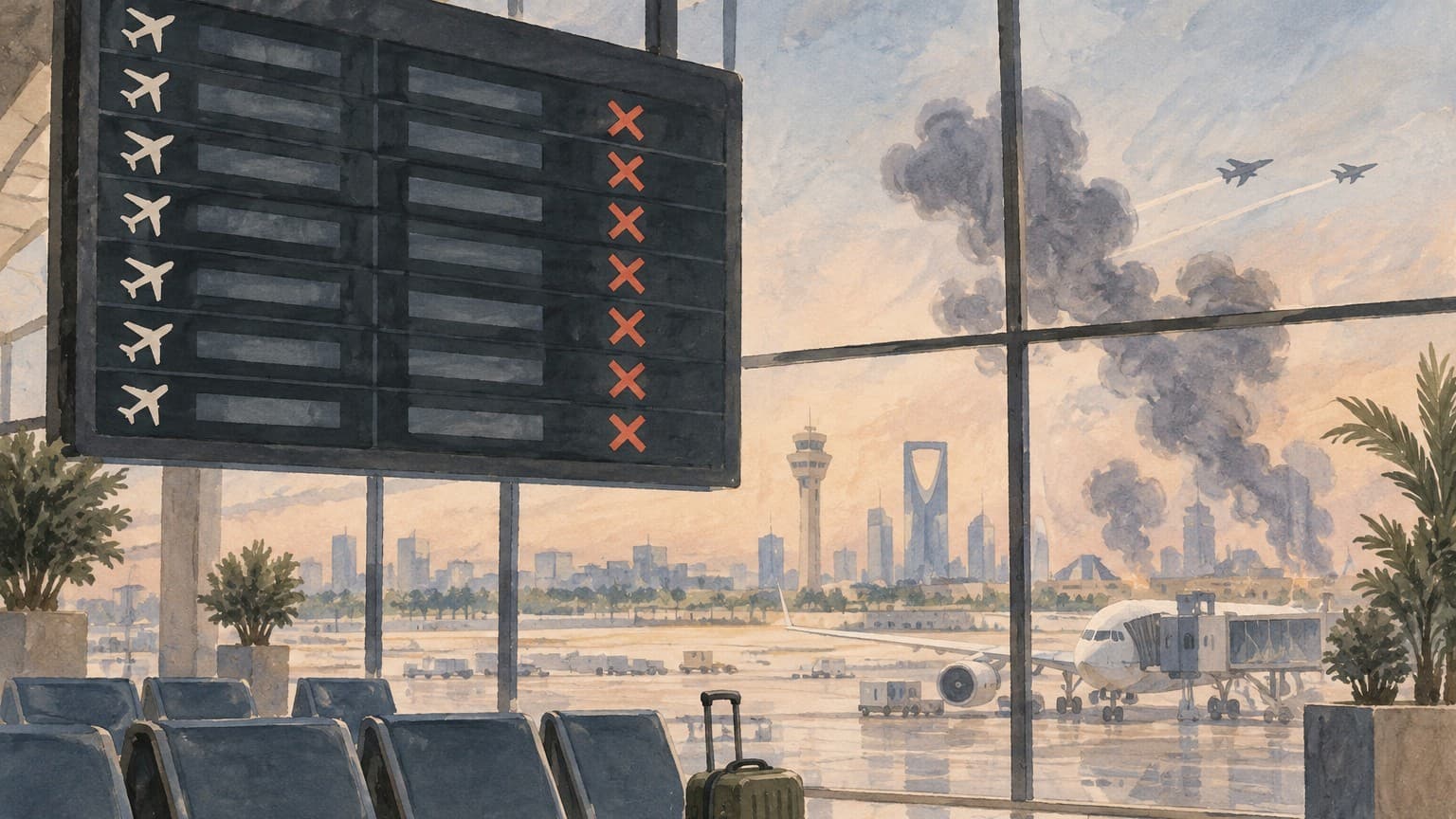
More than 4,000 flights were cancelled at Riyadh’s King Khalid International Airport between 8 and 25 October, according to figures from aviation analytics company Cirium. The 4,071 cancellations represent 86% of scheduled departures at the airport, leaving nearly nine in ten flights unable to operate. Across Saudi Arabia, more than 7,800 flights were cancelled in the same period, which Cirium puts at around 45% of all scheduled departures. The peak day for cancellations was 12 October, when more than 60% of scheduled flights were grounded. Dammam’s King Fahd International Airport saw 42% of flights cancelled during the same period, and Nejran Airport recorded a 100% cancellation rate.
King Khalid International Airport partially reopened on 25 October, operating from terminals one and two. Terminal 1 is handling domestic services, while Terminal 2 is processing international flights operated by national airlines. Since early October, Saudi Arabia has faced a series of attacks on its airports and infrastructure. Riyadh’s airport was hit four times, leading to more than 300 injuries and 17 deaths, according to Condé Nast Traveller Middle East. US embassies across the region have warned citizens to be aware of potential flight cancellations and airspace closures and to exercise heightened vigilance.
Emirates will reinstate its route to Jeddah on 30 October and resume flights to Riyadh and Dammam on 8 November. Etihad Airways has stopped Riyadh and Dammam flights through 5 November, and a few departures on 6 November are also affected. Qatar Airways has stopped flying to and from Abha, Dammam, Riyadh and Taif with no restart date, and now runs four daily Jeddah flights instead of seven. Flydubai has suspended services to Abha, Dammam and Riyadh through 29 October and has halted all Tel Aviv flights after a terror incident. Air India has stopped flying to Riyadh and Dammam until 7 November; Jeddah service returns on 31 October. IndiGo is not flying to Riyadh, Jeddah, Dammam or Madinah before 14 November, citing continuing airspace restrictions.
The European Union Aviation Safety Agency is still issuing conflict-zone advisories for Saudi Arabia, Iran, Iraq, Lebanon, the Persian Gulf and Gulf of Oman; the main warnings are valid until 16 November. EASA tells operators to avoid a defined section of the Jeddah Flight Information Region and to be careful elsewhere. The UK government advises against all but essential travel to Saudi Arabia and warns against any travel within 10km of the Yemeni border; it also tells British nationals to avoid King Khalid International Airport because it may be targeted again. Saudi Arabia’s General Authority of Civil Aviation currently requires carriers to get approval under NOTAMs before flying to or from Riyadh.
Airlines provide refunds and flexible rebooking options, but each carrier has its own policy. Fragomen said that South Africa is again granting temporary visa relief to foreign nationals whose travel has been disrupted by airspace closures; the measures run through 30 November or until a ceasefire allows travel to resume, whichever happens first. Travellers should expect technical stops, cancellations, schedule shifts and rerouting delays, with unscheduled fuel stops in southern Europe on some low-cost carriers.
Corrections. To report an error, write to corrections@sundaybestjournal.com. We list corrections on the corrections page.
Travel correspondent
Felix Arden covers places, journeys and where to stay for Sunday Best. He writes from published reporting and announcements, and has not visited the places he covers.
Air New Zealand flight NZ165 from Auckland touched down on 26 October, a day after Jetstar launched domestic flights at the 24-hour airport.
By Felix Arden
The Chicago-based carrier will fly weekly from O'Hare to Bermuda on Saturdays starting April 3 and add three routes from San Francisco, including new Charleston service.
By Felix Arden
The first aircraft from London Gatwick landed at Bandaranaike International Airport in Katunayake on 24 October; three weekly flights will run seasonally with economy, premium economy and business class.
By Felix Arden