Emirates US expansion

Emirates weighs Denver, Detroit and Philadelphia flights
The airline expects its first 777-9s in 2027 and says Denver, Detroit and Philadelphia are among possible U.S. additions.
By Felix Arden
Sunday 25 October 2026
Sunday BestJournalChiang Mai's Marriott reopened with a 360-degree LED ballroom, Houston's pipeline is nearly 30% luxury, and Ghana's new Hampton targets midscale travelers.
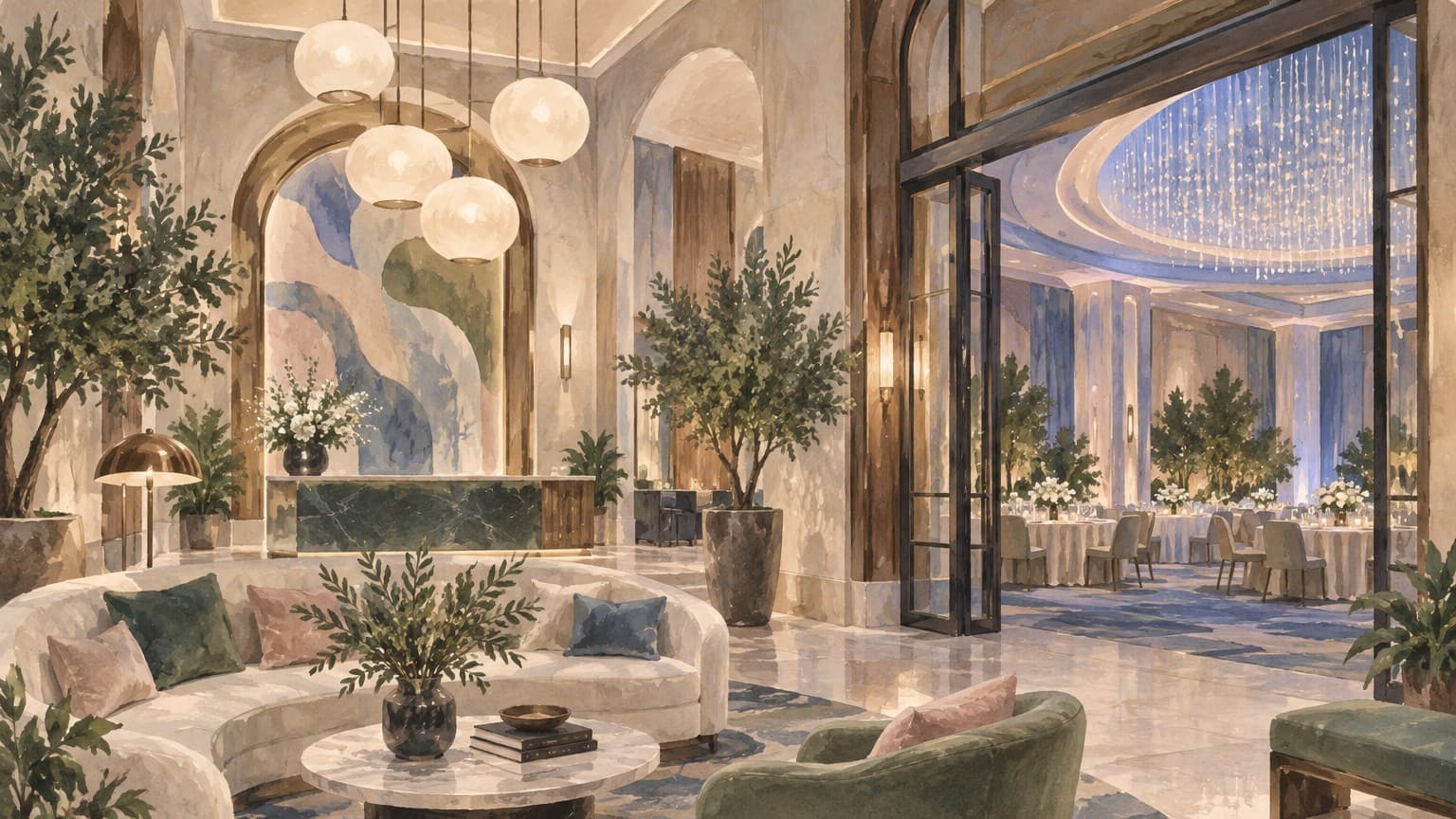
In August 2026, Travel and Leisure Asia reported that the Chiang Mai Marriott Hotel had reopened after a full renovation and rebrand. The property has 383 refreshed rooms and the Plaii Ballroom, which the magazine calls a first for Thailand: a 360-degree LED ballroom with 84 metres of wraparound LED walls and about 400 square metres of flexible event space. Its Italian restaurant Favola has appeared in the Michelin Guide Chiang Mai every year from 2022 through 2025.
Hotel Online published PCL Construction’s 2026 hospitality construction report on August 17. The report, drawing on IBISWorld data, says new hotel construction generated about $16.4 billion in U.S. revenue in 2025, or 69% of the industry total, while renovations and additions brought in $6.4 billion, close to 27%. Renovation activity is expected to keep expanding, and the report forecasts a 2.6% compound annual growth rate for hotel construction over the next five years.
Experience has become a central driver. The PCL report says 94% of travellers incorporate self-care into trips, 59% take solo wellness getaways, and the wellness industry is valued at nearly $8 trillion. Event-based travel is another force: the report says the FIFA World Cup was set to add $9.6 billion in spending across the United States. “Travelers are prioritizing experience over a standard hotel through wellness-driven amenities, outdoor-focused properties and destinations that feel immersive,” said Jeyre Lewis, area manager for PCL’s Orange County office, in the report.
Costs are also pushing owners toward renovation or higher-end projects. Lewis said owners can renovate a property for less money per room, finish faster and open sooner than they could with a new build. In Houston, CoStar’s Didio Pequeno told the Chronicle that construction costs have risen substantially, so developers must build higher-end hotels that can drive room rates and net operating income.
The Houston Chronicle reported that Houston’s development pipeline includes about 38 hotel projects totaling around 4,550 rooms, according to CBRE. Only about 21% of those rooms are in the traditional central business district and Galleria/Greenway Plaza submarkets combined. CoStar data shows luxury rooms are about 4% of existing inventory but nearly 30% of rooms under construction.
Among the projects the Chronicle listed, The Greenleigh, a redeveloped former Hotel Derek, will open in December with a 15th-floor rooftop bar; The Birdsall, Auberge Collection, is set for 2028 with 105 rooms and 44 private residences; and a Ritz-Carlton planned for 2029 will have 156 hotel rooms and 112 condominium residences. Hotel Daphne began welcoming guests in the Heights in December 2025. Thompson Houston and Hotel Saint Augustine arrived in Montrose in 2024.
Jersey Digs reported that Travel & Leisure named the 27-room Hotel Albatross in Ocean Grove, New Jersey, the best inn in the United States. The Victorian property, built in 1881 and renovated before opening in 2025, has rates starting at $250 a night.
Nikkei Asia reported on September 11 that hotel projects across Japan are being postponed or reconsidered because of rising construction costs and labor shortages. Even as investment in the sector grows on expected foreign visitor growth, the industry is pivoting to refurbishments.
African Review reported that the International Finance Corporation has announced long-term financing for PLP Properties, backing a 170-room Hampton by Hilton near Accra International Airport. The project is expected to support roughly 1,000 jobs in total, of which 200 would be permanent. The design aims to cut energy use by at least 40% and water use by 20% compared with a typical building, and the hotel is expected to buy from local small and medium enterprises.
These examples show how hotel development is splitting across markets: renovations and repositioning in expensive destinations, experience-led luxury in strong leisure cities, and sustainable midscale builds in emerging tourism economies.
Corrections. To report an error, write to corrections@sundaybestjournal.com. We list corrections on the corrections page.
Travel correspondent
Felix Arden covers places, journeys and where to stay for Sunday Best. He writes from published reporting and announcements, and has not visited the places he covers.
The airline expects its first 777-9s in 2027 and says Denver, Detroit and Philadelphia are among possible U.S. additions.
By Felix Arden
The proposed approval carries a $2,000 annual fee and still needs security clearances before passengers on overflying or landing foreign airlines can use the service.
By Felix Arden
Qsuite award seats are available from 10 U.S. cities to Doha, with 70,000 Avios one-way and a 35% transfer bonus cutting the cost to as few as 51,852 points.
By Felix Arden