Voxel Series-1

Tuesday Labs debuts Voxel Series-1 household chore robot
The New York company's counter-height robot can water plants and sweep crumbs, and first units will go to early adopters for $20,000.
By Clara Whitlow
Tuesday 27 October 2026
Sunday BestJournalA man in his 60s with leukemia died after showing neurological symptoms. French health officials say there is no risk to the public based on what is known about the virus.
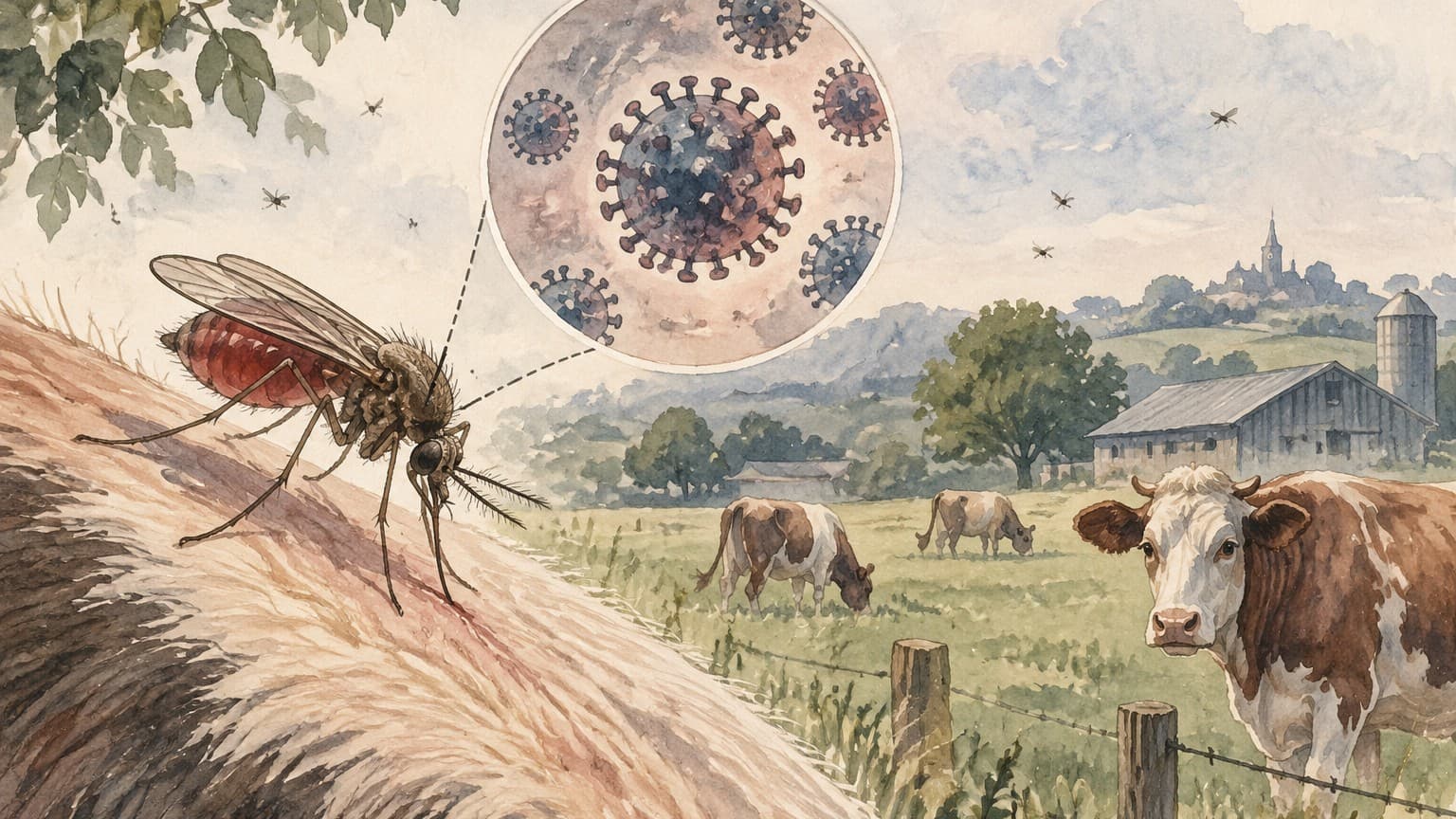
French health authorities reported the first known human infection with Shamonda virus, a pathogen usually found in cattle, in a report published on October 22. The man, in his 60s and diagnosed with leukemia, died on October 9, sixteen days after developing neurological symptoms that included blindness and confusion.
The report appeared in Eurosurveillance. Smithsonian magazine translated a statement from French health officials describing the case as exceptional in a severely immunocompromised patient and stating that, based on what is known about the virus, there is no risk to the public.
Shamonda virus is an orthobunyavirus spread mainly by biting midges, Krispin Hajkowicz, who studies infectious diseases at the University of Queensland in Australia, told Nature. It mainly infects cattle, but sheep, horses, goats and alpacas have also been found with infections. The virus was first identified in Nigerian cows in 1965 and has since appeared in other parts of Africa and in Japan. This summer it reached Europe, with cases in German and Swiss cattle, according to the World Health Organization, and it then moved through dairy cows and horses in Austria, Belgium and France.
In animals, Shamonda virus can cause fever, diarrhea and reduced milk production, as well as reproductive problems such as stillbirths and fetal malformations, the World Organization for Animal Health says. Some horses have developed neurological conditions, though that symptom is rare. No treatments or vaccines exist.
The man lived in the countryside roughly an hour from Lyon, in a region where Shamonda had already been detected in cattle. Officials suspect a midge carrying the virus bit him. Jean-Luc Guérin, who co-authored the Eurosurveillance report and works at the National Veterinary School of Toulouse, told Science that midges typically do not feed on animals, so entomologists are studying whether mosquitoes might also transmit the virus.
The World Health Organization's director-general, Tedros Adhanom Ghebreyesus, wrote on social media that the patient was immunocompromised, which made him more vulnerable to infection and severe disease. ABC News reported that the range of possible symptoms and health effects in humans is unknown because this is the first documented case.
The European Centre for Disease Prevention and Control said investigators are still working to determine how the man got infected. They are recording the details of his case, figuring out where he was likely exposed, and comparing those findings with data from animals. Gregory Emery, who leads France's health directorate, told Reuters the case is "unprecedented from a scientific and virological point of view."
Investigators are also studying whether the virus contributed to the man's death, STAT reported. The World Health Organization has said broader transmission is unlikely.
Corrections. To report an error, write to corrections@sundaybestjournal.com. We list corrections on the corrections page.
Food and drink correspondent
Clara Whitlow covers restaurants, cooking and the people behind them for Sunday Best. She writes from published reporting and announcements, and does not review restaurants.
The New York company's counter-height robot can water plants and sweep crumbs, and first units will go to early adopters for $20,000.
By Clara Whitlow
Warmth, craft and function are in for 2027, while all-beige, floral overload, farmhouse, bouclé and matte black face retirement.
By Clara Whitlow