Farmworker rights

Dolores Huerta, labor leader who coined 'Sí, se puede,' dies at 96
She co-founded the United Farm Workers and spent decades organizing farmworkers before disclosing abuse by César Chávez in 2026.
By Iris Novak
Wednesday 28 October 2026
Sunday BestJournalFingerprint analysis of 36 clay soldiers found 45 percent of identifiable prints were likely left by adult women and 22 percent by juveniles under 15, according to a study in the Journal of Cultural Heritage.
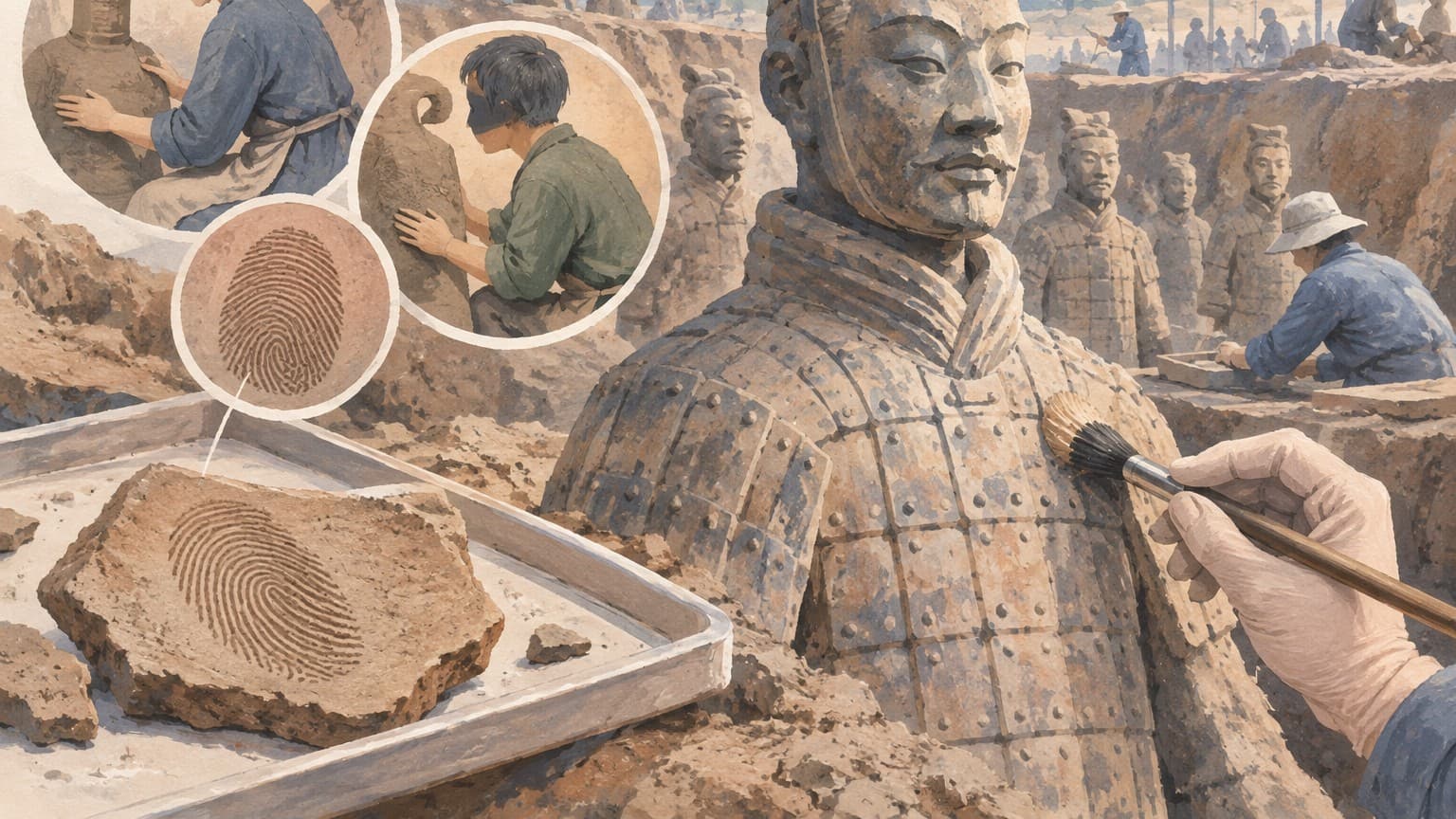
A new fingerprint analysis of 36 terra-cotta warriors from the tomb of China’s first emperor, Qin Shi Huang, found that 45 percent of the 79 well-preserved prints studied were likely left by adult women, 33 percent by adult men, and 22 percent by juveniles under 15, according to a study published in the Journal of Cultural Heritage. The research team, led by archaeologist Xiaoxi Li of the Emperor Qin Shi Huang’s Mausoleum Site Museum, writes that the results provide “the first biological evidence for a diverse workforce including adult females and juveniles.”
The emperor died in 210 B.C.E. and was buried with an army of about 8,000 terra-cotta warriors, which farmers rediscovered in 1974 while digging a well in northwest China. Experts generally agree that the torsos were modeled by hand while the heads and hands were cast from molds. Art historian Wu Hung described in a 2003 book how coarse clay was covered with finer clay, carved, fired, painted, and fitted with real weapons.
To estimate the age and sex of the workers, Li’s team used a Bayesian mixture model laid out in a 2023 journal article rather than classifying each print individually. Guillermo Carvajal, writing for La Brújula Verde, explained that the method works like an opinion poll: it runs through many possible combinations of ages and sexes, keeps the ones that fit the measurements best, and returns probability ranges instead of certainties. The paper defines juveniles as those under 15, citing Qin dynasty records that suggest this age was the minimum for criminal responsibility as well as the threshold for forced labor and military service.
The researchers caution against reading the fingerprint percentages as a direct census of the workforce. The sample came from just one of three army pits, a single person could have left prints on multiple sculptures, and the study adds that those with less experience, such as women and children, probably left prints more often than trained artisans, who may have wiped them away. The authors also note that traditional fingerprint methods based on mean ridge breadth and ridge density can fail because adult women and teenage boys have nearly identical prints, and because those methods do not account for interpopulation variation or post-firing ceramic shrinkage.
The findings align with written evidence from Qin dynasty lacquerware unearthed in Hubei Province, the study says. Inscriptions on those artifacts include phrases that translate as “adult woman,” “young woman,” and “young boy,” indicating that women and children participated in state-supervised lacquer production.
The terra-cotta figures were not realistic portraits of individuals, but they were part of a retinue meant to serve the emperor after death. Art historian Ladislav Kesner wrote in 1995 that the sculptors sought to recreate reality with as much verisimilitude as the medium allowed. Archaeologists have also found sculptures of acrobats, civil servants, and waterfowl in the mausoleum pits. Duan Qingbo, then-head of the excavation team, told Smithsonian magazine in 2009 that the underground pits imitate the real organization of the Qin dynasty and that the emperor took a whole political system with him.
Corrections. To report an error, write to corrections@sundaybestjournal.com. We list corrections on the corrections page.
Culture and style correspondent
Iris Novak covers books, film, art, design and fashion for Sunday Best. She writes from published reporting and announcements, and does not review works.
She co-founded the United Farm Workers and spent decades organizing farmworkers before disclosing abuse by César Chávez in 2026.
By Iris Novak
The 1907 painting was looted by Nazis and spent nearly fifty years at Munich's Lenbachhaus before its 2023 return to the Lewenstein heirs.
By Iris Novak
The late canvas from the Schlumberger collection sold after a 42-minute bidding war at Sotheby's Paris and had not been shown publicly.
By Iris Novak