Monet Iris Sale
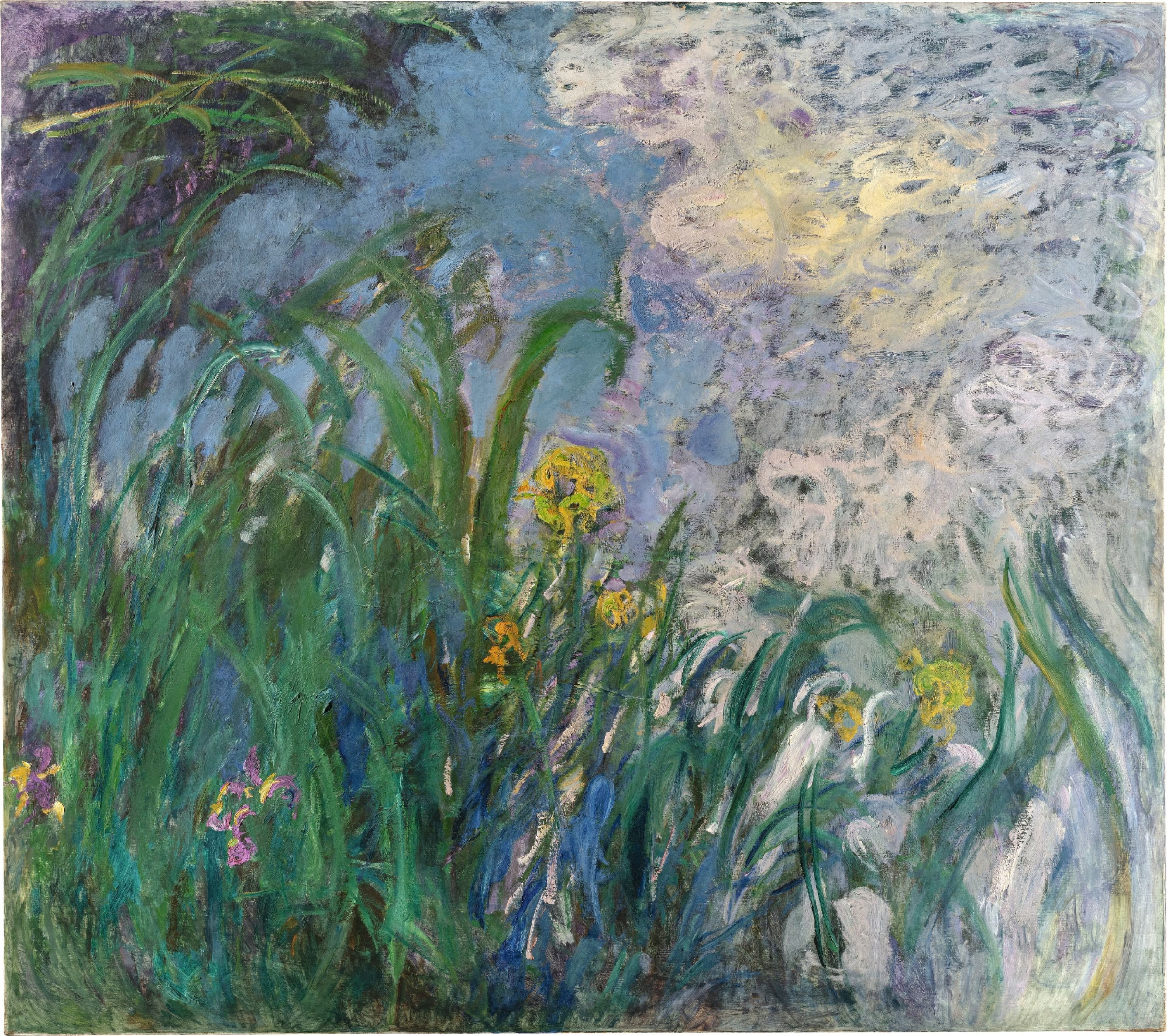
Monet's Iris Sets French Auction Record at $56.2 Million
The late canvas from the Schlumberger collection sold after a 42-minute bidding war at Sotheby's Paris and had not been shown publicly.
By Iris Novak
Wednesday 28 October 2026
Sunday BestJournalThe 1907 painting was looted by Nazis and spent nearly fifty years at Munich's Lenbachhaus before its 2023 return to the Lewenstein heirs.
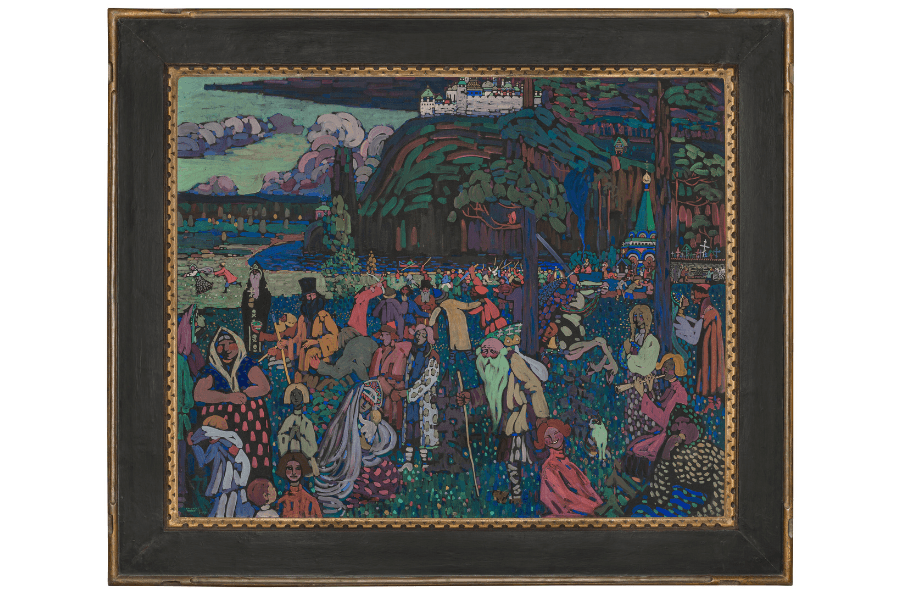
At Christie's London evening auction of 20th and 21st century art this month, Wassily Kandinsky's 1907 painting Das bunte Leben, or The Colorful Life, sold for about $42 million after being returned to the heirs of its original Dutch Jewish owners in 2023.
Auctioneer Adrien Meyer introduced the work as "the most important early work by the artist to ever come to auction," Daniel Cassady and Hikmat Mohammed reported for ARTnews. Bidding lasted six minutes, and the final price far exceeded the painting's pre-sale high estimate of $33 million. Claire Moses of the New York Times reported that Christie's would not name the buyer.
Kandinsky made the work while staying in Paris with Gabriele Münter, a German painter and his partner, and its width of more than five feet made it his largest canvas then. Christie's says the artist drew on French Fauvism and Russian folklore, and quotes him saying he wanted to "let the viewer take a stroll within the picture" and "become absorbed" in it. The canvas depicts wanderers, monks and revelers against a dark background; an elderly traveler's beard glows mint green and lovers embrace while a funeral procession passes in the distance. Among the figures is an armored knight on horseback, a motif Kandinsky later transformed into the emblem of the expressionist group Der Blaue Reiter, founded in 1911.
Art dealer Daniella Luxembourg told the Guardian in 2017 that the painting was "an iconic piece" and "one of his most important works," painted at a key point before Kandinsky moved to pure abstraction.
During the 1920s it became part of the holdings of Emanuel Lewenstein, a Jewish industrialist in the Netherlands, and his wife Hedwig Lewenstein-Weyermann. After Lewenstein's death in 1930, Hedwig loaned it to the Stedelijk Museum in Amsterdam; after her death in 1937 the collection passed to their adult children, who fled Europe as Nazism rose. After the Nazi invasion of the Netherlands in May 1940, the Lewenstein collection was put up for auction in Amsterdam five months later. Das bunte Leben fetched 250 Dutch guilders, a price the Guardian reported was only 10 to 20 percent of its then-market value, and the family never authorized the transaction or received the money.
After private transfers, Bayern LB bought the canvas in 1972 and lent it long-term to the Lenbachhaus in Munich, where it remained for almost fifty years. The Lewenstein descendants filed a lawsuit against the bank in 2017. In 2023 the German government's panel on Nazi-looted art advised giving the painting back, and it said there were "numerous indications that this was a case of a seizure as a result of Nazi persecution," Catherine Hickley reported for the New York Times.
The sum remained below Kandinsky's auction record of $45 million, achieved by Murnau With Church II at Sotheby's in 2023. Marc Porter, chairman of Christie's Americas, said in a statement that the restitution "represents an important moment in the painting's history" and that its return to the market "marks the beginning of a new chapter for a work that holds such a significant place in modern art".
Corrections. To report an error, write to corrections@sundaybestjournal.com. We list corrections on the corrections page.
Culture and style correspondent
Iris Novak covers books, film, art, design and fashion for Sunday Best. She writes from published reporting and announcements, and does not review works.
The late canvas from the Schlumberger collection sold after a 42-minute bidding war at Sotheby's Paris and had not been shown publicly.
By Iris Novak
The rapper and Roc Nation executive will perform at SoFi Stadium on Feb. 14 in what will be his first Super Bowl halftime appearance.
By Iris Novak
The show at the Museum of the Romani National Revival presents life stories of 100 partisans and soldiers chosen from more than 1,400 fighters documented in archives.
By Iris Novak