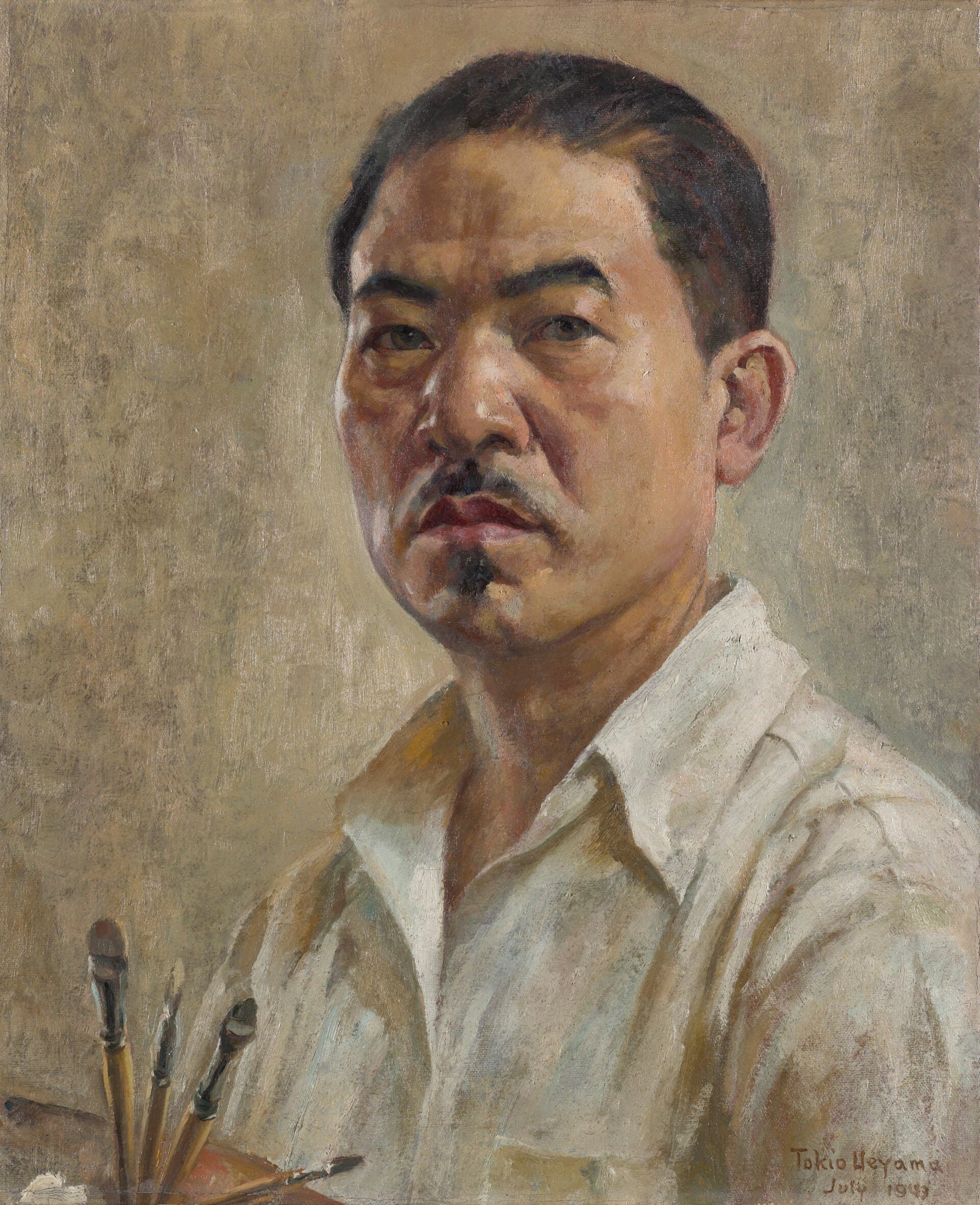
Hoodline reported on Oct. 23 that the UCI Langson Orange County Museum of Art opened “Tokio Ueyama: The Hollows Between Mountains” in Costa Mesa on Sept. 26, 2026. The exhibition runs through Feb. 28, 2027, and presents the Japanese American painter’s work with the first English translations of his personal papers and Japanese press coverage.
The museum says this is the first major museum show in California devoted to Ueyama, who was born in Japan in 1889, lived until 1954, and moved to the U.S. in 1908 for art study. The museum says UC Irvine’s East Asian Studies Department worked with a translator in Tokyo for two years to produce the English versions. Ueyama’s niece Grace Nozaki gave the papers to the Smithsonian’s Archives of American Art in 2023, and the archive digitized them the next year. The Daily Pilot reported on Oct. 23 that assistant curator Michaëla Mohrmann organized the show; its sponsors are Yasuko Bush, Grace and Mark Nozaki, and Clement and Angie Hirai Yang.
He lived in Los Angeles’s Little Tokyo and took part in the region’s plein air movement. By 1942, over 35,000 people lived and worked within a three-mile radius of what is now the Little Tokyo Historic District, according to the National Park Service, and only one-third came back after the war. Those figures frame the community around Ueyama rather than his personal experience.
The exhibition places Ueyama’s work alongside paintings by California Impressionists who were contemporaries and, in some cases, friends. It shows his “Red Rock Canyon” next to photographs by Edward Weston, who suggested the site after Ueyama’s 1925 visit to Mexico. During that trip he met Diego Rivera, José Clemente Orozco and Miguel Covarrubias and encountered Mexican muralism. Although Ueyama called himself a post impressionist, Mohrmann said racial dynamics kept him from joining groups such as the Laguna Art Assn. and California Art Club.
The title comes from a 1927 haiku by Boshicho Okamura, with whom Ueyama co-founded the Japanese artist collective Shaku-Do-Sha. The haiku, “Fires on the Plains,” appears at the show’s entry. Mohrmann said the show celebrates Ueyama’s “multicultural position” between two empires and his place between media, wars and cultures.
The final section covers his incarceration at the Granada Relocation Center in Colorado, known as Amache. Densho says he supervised Amache’s art department with Koichi Nomiyama and taught watercolor, charcoal and oil painting to other incarcerees. Amache reached 7,318 Japanese American residents at its 1943 peak, the National Park Service says, and its residents included people moved from the Santa Anita Assembly Center in California. A painting formerly known as “The Evacuee” is on view; Mohrmann said her research found the correct title to be “In Santa Anita,” referring to the assembly center.
Director Kathryn Kanjo said the show sheds light on Japanese immigrant experiences that have remained outside mainstream narratives of American art. “You learn things that you might not have expected to experience here,” Kanjo said. The museum is at 3333 Avenue of the Arts, Costa Mesa.